Research

Energy conversion, resolved in time

A solar cell, a photocatalyst and a spin device all succeed or fail in the first few picoseconds after light is absorbed. We build the optical tools to watch that window, and we use the answer to design better materials.

Why ultrafast

The interface is where the efficiency is lost

Building an efficient and stable solar conversion system requires understanding, mechanistically, how energy flows through a material. The dynamics at the interfaces of energy-conversion materials are among the decisive factors for both efficiency and stability — and they are exactly the part that steady-state measurements cannot see.

Time-resolved ultrafast spectroscopy is one of the most powerful tools for this problem, and interface-selective ultrafast spectroscopy is the sharpest version of it. With pump–probe techniques we can directly describe the full sequence of mass and energy transfer during a surface or interfacial conversion process.

THE GROUP'S THREE CORE DIRECTIONS
  • Ultrafast reflection spectroscopy to resolve carrier mobility and surface recombination velocity at the surfaces and interfaces of solar cells.
  • Ultrafast in-situ reflection spectroscopy to resolve the surface reaction mechanism and kinetics of photoelectrochemical water splitting.
  • Ultrafast polarization spectroscopy to resolve carrier spin dynamics in low-dimensional materials.

Our working thesis: lattice chirality, strain and interfacial field form one common set of knobs that governs both spin lifetime and hot-carrier lifetime — two problems that the literature usually treats as separate fields. Seeing them as one is what lets us move from reporting a number to predicting it.

What makes this different

Four things we do that most ultrafast work does not

01

Interface-selective, not bulk-averaged

Most transient absorption is measured in transmission, which averages the whole film and buries the surface signal inside the bulk. We work in reflection with a tunable probe depth, so the buried interface can be addressed on its own.

02

Spin and hot carriers on one bench

The same femtosecond platform answers three questions that are normally asked in three different communities: where the charge goes, how long the spin remembers, and which bond is moving.

03

From lifetime to design rule

We do not stop at reporting a lifetime. We identify what sets it — deformation potential, exciton binding energy, Rashba splitting, A-site cation, dimensionality, halogen bonding — so the number becomes a knob a synthetic chemist can turn.

04

Predictive, not only descriptive

We have reached the point where spin relaxation time can be predicted from composition alone. That is the test of whether a mechanism picture is actually right.

Directions

Four threads, one toolkit

Each direction uses the same femtosecond laser and the same philosophy: isolate one interface, one carrier species, one spin state, and follow it.

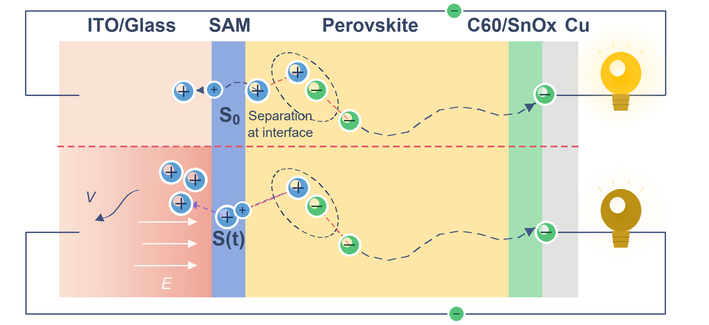
Band diagram of a perovskite solar cell showing charge separation at the SAM interface

01  Interfacial charge dynamics in photovoltaics

The blind spot

A steady-state measurement returns one averaged lifetime for the whole film. Surface recombination — the part that actually sets open-circuit voltage — disappears inside the bulk signal.

What we measure

Transient reflection with a tunable probe depth, so the absorption length of the probe decides how deep we look. Surface and bulk recombination separate in the same dataset.

What we found

Interfacial field and ion migration feed back on each other on the picosecond timescale, and self-assembled monolayers reshape the energetic landscape within picoseconds rather than acting as a static dipole.

What it changes

Surface recombination velocity and interfacial field stop being fit parameters and become quantities an interface engineer can target.
Surface recombination velocity Charge extraction SAM / HTL interfaces
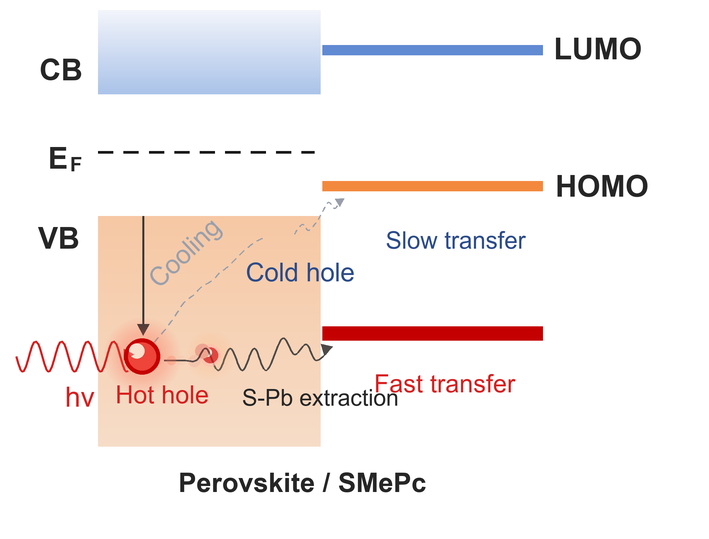
Hot hole transfer from a perovskite absorber to a phthalocyanine layer

02  Hot carriers: extracting energy before it cools

The blind spot

Cooling is over in a picosecond. Steady-state spectra show only the thermalised end state, so whether extraction can ever beat cooling stays an argument about models.

What we measure

Cooling with sub-100 fs resolution, measured against the hole-transfer rate at the same interface — the two rates that compete.

What we found

With phthalocyanine derivatives as hole acceptors, hot holes leave the absorber faster than they cool, giving a hot-carrier perovskite cell above 27%. A-site organic cations and chiral lattice strain both slow the cooling.

What it changes

Breaking the Shockley–Queisser limit moves from a conceptual proposal to a device number, and "slower cooling" becomes an engineering target with known handles.

Hot carrier cooling Beyond SQ limit Phonon bottleneck
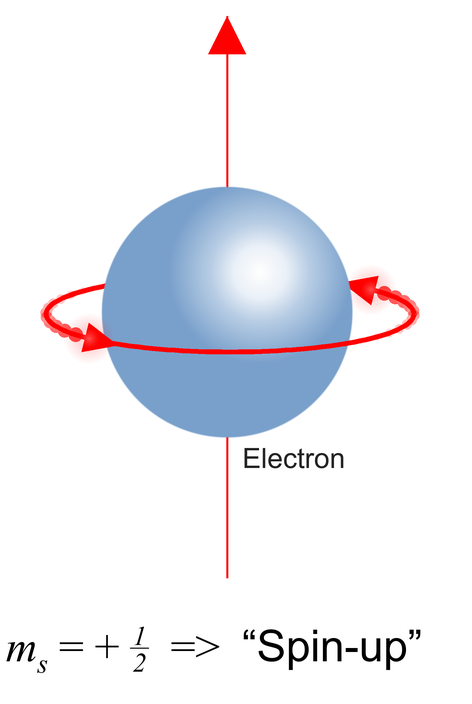
Spin-up and spin-down carriers precessing in a perovskite crystal lattice

03  Spin, chirality and light–matter interaction

The blind spot

Spin lifetimes are routinely measured, but a lifetime alone does not say what sets it. Without that, spin cannot be engineered — only screened.

What we measure

Circular-polarization-resolved pump–probe, which reads the spin population and its coherence directly, repeated across composition, dimensionality and strain.

What we found

Spin lifetimes are set by deformation potential, exciton binding energy, Rashba splitting and dimensionality; an engineered spin cascade in chiral multiple quantum wells extends them further; and spin relaxation can now be predicted from composition by machine learning.

What it changes

Spin lifetime shifts from a property you inherit from a material to a parameter you design — with chirality and strain as the handles.

Spin lifetime CISS Rashba / Dresselhaus Chiral perovskites
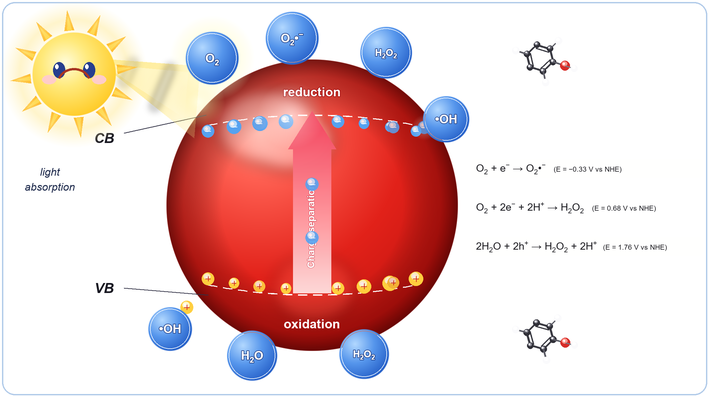
Photoexcited carriers transferring to surface catalytic sites

04  Photocatalytic reaction mechanisms

The blind spot

Intermediates are dilute and short-lived. Measure after the reaction and you only see products, so every proposed pathway remains plausible at the same time.

What we measure

In-situ and operando ultrafast spectroscopy, in photoelectrochemical cells and gas-flow reactors, tracking the characteristic absorption of trapped holes while the reaction runs.

What we found

One-electron water oxidation intermediates on TiO2 and SrTiO3, hole preservation at undercoordinated tungsten sites, and ultrafast H2O2 photosynthesis reaching gram-per-litre concentrations at 2.74% solar-to-chemical efficiency.

What it changes

"Which intermediate deserves engineering" becomes an answerable question instead of a list of competing hypotheses.

Water oxidation H2O2 photosynthesis In-situ spectroscopy
Toolkit

How we measure it

Femtosecond lasers, interface-selective detection, and a lot of careful alignment in the dark.

Transient reflection & absorption

Femtosecond pump–probe in reflection and transmission geometry, from the visible to the near-infrared, with tunable probe depth for buried interfaces.

Time-resolved photoluminescence

Streak-camera and TCSPC detection to separate radiative and non-radiative decay, and to extract surface recombination velocity from thickness-dependent series.

Polarization-resolved spectroscopy

Circular and linear polarization analysis of the probe to isolate spin populations, spin coherence and chiral optical selection rules.

In-situ / operando cells

Photoelectrochemical cells and gas-flow reactors that keep the sample under real reaction conditions while the laser probes it.

MIR pump

A tunable mid-infrared pump excites a chosen vibrational mode or sub-gap carrier population, so a single degree of freedom can be perturbed and its relaxation followed in real time.

Probe

Broadband probe pulses from the visible to the mid-infrared read out the excited state: ground-state bleaching, photoinduced absorption, and the vibrational fingerprints of polarons and hot carriers.

Data-driven analysis

Global and target analysis of transient datasets, plus machine-learning models that link structure and composition to measured dynamics.

Access to the toolkit

Bring us a question that steady-state measurements cannot answer. We run four interface-selective and operando measurement lines, and we are more interested in your mechanism argument than in your sample count.

Start a collaboration